Showing posts with label corruption. Show all posts

Friday, February 8, 2013

PolEco: Gerry Ortega's Slay Traced to Malampaya fund Misuse (An article from the Inquirer website)

Ortega slay traced to Malampaya fund misuse

By ,


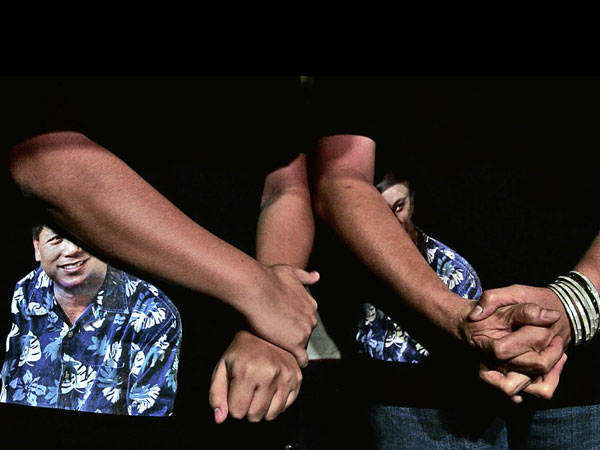
FIST CLENCHED, HANDS CLASPED Photos of slain environmentalist Dr. Gerry Ortega are printed on the shirts of his daughter and wife attending the Senate blue ribbon committee probe of the misuse of P3.9 billion in Palawan province’s share of royalties from the Malampaya gas project. Sen. Teofisto Guingona III, committee chairman, says Ortega’s exposé on the fund misuse by former Palawan Gov. Joel Reyes led to his murder in 2011. JOSEPH VIDAL/PRIB

Dr. Gerry Ortega’s incessant radio commentaries against then Palawan Gov. Joel Reyes’ involvement in the alleged misuse of billions of pesos of the province’s share from the Malampaya gas project resulted in his death, fellow journalists told the Senate blue ribbon committee on Thursday.
Sen. Teofisto Guingona III, chairman of the Senate panel that looks into the accountability of government officials, called on the Court of Appeals (CA) after the hearing to make “the proper discernment” on the government’s appeal of its dismissal of the murder case against Reyes.
“I’d like to point out that right after [Ortega] was killed, I was told by government officials, [Puerto Princesa] Mayor [Edward] Hagedorn among them, that I might be well-advised to take security precautions,” Inquirer Palawan correspondent Redempto Anda told the committee.
Anda said he and Ortega had been working on reports about corruption attending billions of pesos worth of projects funded by royalties from the Malampaya gas project. He said Ortega had received death threats especially when their coverage started uncovering more than enough evidence.
“Several people were casing my house six, seven days after he was killed. This was in correlation with the testimony of the state witness that originally there were two journalists who were in their contract for the hit job,” Anda said.
Anda, who is also an officer of the National Union of Journalists in the Philippines, thanked the Inquirer for providing him with security “until now.”
Exposé on P3.9 billion
Anda said there was no other reason for the threats other than the exposé by provincial media and civil society of the misuse of P3.9 billion from the Malampaya gas project.
“My situation… I’d like to stress is a very typical situation of what threats are posed to journalists, not just to journalists, but civil society participants in Palawan who are very active in this issue [of corruption in the provincial government],” Anda said.
“I firmly believe… that this has no other reason other than the exposé on the Malampaya corruption. I was speaking with Dr. Gerry Ortega when he was under serious threat already and this was only his topic at the time,” Anda added.
Substandard projects
Guingona suspended the hearing until the committee received documents from relevant government agencies in connection with substandard infrastructure projects, whose multibillion-peso funding was disallowed by the Commission on Audit (COA).
“We would also wait for the steps that would be taken by the COA, Ombudsman, Department of Public Works and Highways, National Bureau of Investigation, Department of Justice (DOJ), Bureau of Immigration and even the Court of Appeals,” Guingona said.
Reversal of DOJ finding
He said the case was of primary importance, just like the case of the Maguindanao Ampatuan massacre. “This is a case about grave injustice done to one man, Doc Gerry, who spoke the truth,” Guingona added.
The appellate court late last year reversed the DOJ finding of probable cause to charge Reyes and his brother with murder in connection with Ortega’s murder.
The decision is now the subject of a motion for reconsideration in the appellate court.
“I challenge the justices of the CA to make the proper discernment in upholding the law and dispensing justice for everyone,” Guingona said.
The senator said the committee had so far established that Palawan’s funds were indeed misused.
“It’s clear from the testimony of [Public Works and Highways] Secretary [Rogelio] Singson that the quality of projects funded by the Malampaya funds was unacceptable,” Guingona said.
Projects disallowed
“One could also note that the projects were located in inappropriate places and that there were multiple funds and projects all in the same place,” the senator said.
Guingona said that aside from the P3.9 billion from Malampaya, there was a release of P6 billion from the Arroyo administration’s so-called State-of-the-Nation-Address (Sona) funds—or projects mentioned in the Sona in 2009.
“The COA also clearly said that the projects funded by the Malampaya funds were disallowed because of violations of the bidding process,” he said.
Guingona said pronouncements of the DPWH and the COA seemed “to give credence to the corruption using Malampaya funds as alleged by Bishop [Pedro] Arigo and other [nongovernment organizations and people’s organizations].”
Fake passport
Aside from establishing the relationship between Ortega’s death and the corruption in the Palawan government during Reyes’ term, Thursday’s hearing also found vulnerabilities in the system of the Department of Foreign Affairs (DFA) and Bureau of Immigration (BI) regarding the travel of persons linked to crime.
“We saw holes in the DFA’s system of issuing passports and the huge one in the BI’s net in screening the coming and going of persons in the country. These were used by the suspected masterminds in the death of Doc Gerry,” Guingona said.
Reyes slipped out of the country using a fake passport.
Witness dead
Guingona said there also appeared to be a problem with the country’s witness protection program marked by the death of one of the witnesses in Ortega’s case who was found lifeless in a Lucena City jail.
“There are many recommendations that need to be made to improve different agencies of government after our hearings in the past three weeks,” he said.
But the Bureau of Jail Management and Penology (BJMP) on Thursday played down insinuations that there was foul play in the death of a key witness in the murder of Ortega.
‘Suicide’
Chief Supt. Serafin Barretto, BJMP Calabarzon director, maintained that Dennis Aranas, who served as a lookout in the January 2011 assassination of Ortega in Puerto Princesa City, committed suicide by hanging himself in his cell at the Quezon District Jail (QDJ) in Lucena City.
Supt. Annie Espinosa, QDJ warden, said an autopsy done by the National Bureau of Investigation showed that Aranas had died of “asphyxia by hanging.”
“There were no signs of bruises, hematoma or wounds on the body,” Espinosa told reporters over the phone.
Barretto had requested the Philippine National Police and the NBI to look into the death of Aranas to dispel allegations that he may have been killed, the BJMP said.
Quarrel with partner
A few days before he was found dead on Tuesday, Barretto said Aranas had a quarrel with his supposed live-in partner, a certain Cris Allen.
Barretto said it appeared that Aranas had long been estranged from his wife, Marilyn.
“His fellow inmates said (Aranas) looked depressed. According to them, Aranas learned that his girlfriend was already living with another man,” Barretto said.
“When the woman visited him (last Sunday), they had a fight. Aranas was also heard saying that he could not bear being in jail,” he added.
Asked why the jail guards did not immediately report the incident to the police, Barretto said the BJMP was not required to submit its report to the PNP “because we are not under the police.”
“There is also no basis for us to investigate. The warden should report it to the BJMP regional office. Then we will inform the police and the family. But it does not mean that the PNP was required to investigate because we have our own investigator,” he said.
Scene cleaned
But the PNP spokesperson, Chief Supt. Generoso Cerbo Jr., said the jail guards should have reported the incident to the local police as a matter of standard procedure in suicide cases.
“When the policemen arrived at the detention cell, the body was no longer there. The scene was already clean,” Cerbo told reporters.
“The BJMP has a lot of investigating to do… (on the) administrative aspects (regarding) the procedure,” he added.

Wednesday, January 30, 2013

PolEco: PLM Statement On the Misuse of MOOE Fund

Written by Partido Lakas ng Masa
Monday, 21 January 2013 00:05

Partido Lakas ng Masa (PLM) is spearheading a campaign to eradicate corruption, patronage politics and shamelessness among government officials. The picket today at the Senate is only the first of the PLM campaign to pursue transparency in government. On the recent scandal over Senate President Johnny Enrile’s distribution of P30 million savings in the maintenance and other operating expenses fund (MOOE) to the senators last December, we call on all senators to return the so-called “gifts” or “bonus” right away. Such appalling act of dispensing people’s money for personal discretions by the senators disgraces and dishonors whatever virtue the people sees in this Senate. While we welcome Senator Miriam Santiago’s move to immediately return the money, we call on each senator not to give back the money to Senate President Enrile. The fund should be returned to the government coffers as savings in the Senate fund last year. As savings, we welcome the government’s allocation of the fund to urgent social welfare projects, or specifically as additional fund to assist the victims of typhoon Pablo in Compostela Valley and Davao Oriental. We also condemn Senator Enrile’s attempt to use the money to factionalize the Senate by giving P1.6 million each to the 18 senators whom he is allied with, and P250,000 each to four senators he obviously hates. This type of patronage politics should be expunged from the Senate and any institutions of government. We also deplore the Commission on Audit’s pathetic response to Enrile’s misuse of government fund. The COA has stated that Enrile’s action is aboveboard and is allowed under the General Appropriations Act. Firstly, the fund is intended for the maintenance and other operating expenses of the members of Senate. Using it for other purposes – in this case, Christmas bonus – is the height of brazenness (kapalmuks or kapal-mukha in the dialect). Secondly, while the disbursement of “savings” of Senate funds by the Senate President can be considered legal, it is downright unethical and callous given the state of poverty and deprivation experienced by millions of Filipinos today. We also demand that the Senate fund and each senator’s funds be subject to scrutiny and audit by the government. We should stop the practice of exempting the Senate from auditing of funds and from submitting receipts or liquidation of their budgets – a practice which has been started during the time of Senate President Marcelo Fernan in the 1990s. If there was a law exempting the Senate from doing this, we require that such law be impugned and repealed outright by the Senate itself. Lastly, we call for the immediate passage of the Freedom of Information Bill which will guarantee the people's right to know where and how the people’s money is used by the Senate and other officials of the government.

Sonny Melencio Chairperson, Partido Lakas ng Masa (PLM)
Cell 0928-5080287
January 21, 2013

Sunday, October 14, 2012

PolEco: PLM Picket at Supreme Court Against Cybercrime Law

PLM Picket at Supreme Court Against Cybercrime Law PDF Print E-mail
Written by Partido Lakas ng Masa   
Wednesday, 10 October 2012 12:25
123
Please click the image above to view all photos.

PLM STATEMENT ON THE CYBERCRIME ACT OF 2012

Technological developments, nay, social progress must lead to increased democratization and not to more curtailment of freedoms. The advent of the Internet and related technologies has opened a wide and free access to democratic space wherein ordinary citizens, including the oppressed workers and, in general, the laboring and propertyless masses, could participate in studying and gathering information and discussing social and political issues.

The Internet has evolved into such a powerful democratic tool that upheavals in other parts of the world were aided by the use of this cheap technology to organize netizens and gather them for collective action against oppressive governments. Such was the case in the Middle East and North Africa which saw the downfall of despotic regimes, in Europe where thousands upon thousands took to the streets against the austerity measures and in the United States where the Occupy Wall St. movement was launched against the world’s richest capitalists, or the global 1%. The graffiti “Thank you Facebook” painted on several of Tunisia’s walls during the Arab Spring sums up this modern phenomenon.

The Cybercrime Prevention Act of 2012 represents for the Philippines a backward step in this development. The law is replete with repressive provisions that violate democratic rights enshrined in the 1987 Constitution. It legitimizes government censorship through Sec. 19, which authorizes the Department of Justice to issue an order to restrict or block access to any content. It institutes in Sec. 12 a regime of surveillance of all system users by authorizing law enforcers to collect or record traffic data in real-time associated with specified communications. It curtails free speech with its libel provision (Sec. 4) and treatment of Internet use as an aggravating circumstance that increases penalties for crimes defined under the Revised Penal Code (Sec. 6).

With the Cybercrime Prevention Act, the Philippine government has caught on to the global trend of denying mass and social movements access to effective means for articulating their demands. Based on several studies published by the OpenNet Initiative, starting the year 2000, governments across the world realized the threat to the power structure posed by the Internet where the freest of speech is expressed. Hence, governments adopted filtering, censorship and surveillance practices in order to restrict, block or control access.

These studies show that filtering practices and policies vary widely among countries, the most notorious of which is the “Great Firewall of China”. Blocked content spans a wide range of social and political topics and governments justify their filtering by referring to one content category, such as pornography, while other content categories were also being blocked. OpenNet Initiative noted “the tendency toward ‘mission creep’ --- that is, once filtering systems were adopted for whatever reason, state authorities would be tempted to employ them to deal with other vexing public policy issues.” In the meantime, state authorities harness the Internet in a way that promotes government-friendly content.

In the Philippines, where official statistics of Filipino families that have experienced hunger rose to 21 percent or about 4.3 million in the past three months; where, according to the Commission on Audit, over 100 billion pesos were lost to corruption under Pnoy’s Daang Matuwid; where elite governance and Trapo politics dominate; where the workers and the poor masses face the constant threat of starvation, high prices of basic commodities and services, termination from jobs and demolition, the Internet provides yet another powerful venue to criticize anti-worker/, anti-poor policies, articulate progressive demands, and subject government to public scrutiny and accountability.

The Internet represents an increasingly contested space where the Philippine State seeks to close all avenues of popular challenge to elite rule and governance. It is a domain wherein conflicts between the elite who are the rulers and the majority who are ruled take place. We must not yield a single inch of our freedoms.

Repeal the Cybercrime Prevention Act now!

Saturday, February 25, 2012

PolEco: Edsa is still unfinished revolution? For whom?

According to P-Noy, Edsa People Power 1 is still an unfinished revolution, but for whom? What have Edsa 1 and Edsa 2 done for the Filipinos? What has changed since the overthrow of the dictatorship? What lessons can be learned from the Edsa uprisings?

Nothing has changed since the Filipinos had overthrown the dictator. Prices of commodities have continued to move up. Basic necessities are still hard to achieve or acquire. Majority of the people still lives in poverty. One positive lesson one can learn from the edsa uprisings was that the Filipinos can, in numbers and in unity, mount a revolution to change the political landscape of the country. But the People Power uprisings were exercises in futility, because the fruits are stolen by the elite: the leaders of the opposing party, the military leaders, and the church elite. What Edsa 1 and 2 installed afterwards are elite democracy, and not true democracy for the people. What we want are changes in the economic and political policies and laws. Curbing corruption is just part of the total change we need to happen in the government. More important than curbing corruption is to replace the laws that are not for the benefit of the masses. The oil deregulation law (law which removed government regulation on pricing of oil) must be scrapped. Epira law (law which opens the power industry to investors and manipulate the pricing based on its supply and demand) must be scrapped. The Herrera law (law which mandates that companies can hire contractuals if they deemed it necessary, based on their profits) must be replaced with one that will ensure workers' security of tenure, and not just the 5 months-5 months per company, without the benefits of a regular employee. And other laws on the security on housing, food, and clothing. Read the PDI article and tremble with indignation !!!

Aquino: Edsa is still unfinished revolution

Saturday, February 4, 2012

PolEco: BMP's position on CJ Corona's Impeachment Trial

This was posted Dec 2011, and the tele novela in the senate is still on-going. It's sure is important to know if the chief justice is corrupt or not, but will the people benefit from this exercise? What if the CJ is found corrupt and impeached, will the price of petroleum go down? In the opposite manner, what if the CJ is really a good person and the prosecution is just doing Malacanang's orders, will the wages of workers and employees rise up? the answer to both question is a big NO!!! Nothing will happen after this theatrical show of legal knowledge and wisdom. The people will go back to its routine of earning a measly amount to provide for their kin's daily needs...

The Filipino people’s Christmas wishlist: Genuine Reform for the Masses, Not a Telenovela of the Elite

PRESS STATEMENT
December 15, 2011
Bukluran ng Manggagawang Pilipino (BMP)

The Filipino people’s Christmas wishlist:
Genuine Reform for the Masses, Not a Telenovela of the Elite

As of late, there has been a blitzkrieg of decisions from various branches of government spurred by the infighting among rival factions of the elite.

The impeachment of Corona; The hospital arrest of Arroyo; The detention of Abalos; The court order for the redistribution of Hacienda Luisita; All seemingly sudden events in a “war of attrition and quick decision” by the contending camps of elitist politics.

A swift and passionate display of “political will” by the Aquino regime! But does this audacity truly reflect the people’s will? No. Because this is but an offensive against P-Noy’s political rivals in order to consolidate his control of the state.

These recent events did not ease the daily yoke of poverty and misery borne by the majority of Filipinos – particularly the workers and the poor. Though they are glaring enough to earn their space in the headlines, these incidents are irrelevant to a people facing a bleaker Christmas due to lower pay, higher prices, irregular jobs and massive unemployment.

While P-Noy and his cohorts may reason that these attempts for a “cleansing of government” would eventually lead to the betterment in the lives of the people. We contend that this anti-Arroyo offensive by the Aquino administration has changed nothing in the modus operandi of corruption to the nation’s coffers and perpetuation of “guns, goons and gold” in our electoral system. Whoever believes in P-Noy’s alibi is either an innocent fool or a downright compulsive liar!

The BMP challenges the Aquino regime: Use your “political will” to expedite the passage of pro-poor, pro-worker reforms inasmuch as the Executive has turned the levers to accelerate the impeachment of chief justice Corona. Where is the Congress majority to enact a hike in wages, to defend regular jobs from the scourge of contractualization?

The administration has been blamed for being so “hasty” and “arbitrary” in its maneuvers against Arroyo. But on gut issues that affect the poor and assail corporate interests – such as the oil deregulation law – the Palace has always been too cautious, with Lacierda sounding like a broken record on the “need to review in order to balance all interests”.

To the workers, these latest political incidents are episodes of a tasteless telenovela of elite infighting. Not only do they not address the gut issues of the people. More so, they are not entertaining enough for us to forget our grumbling stomachs. We demand genuine reform!

Sunday, December 11, 2011

PolEco: NBI's True Color Exposed - from Mon Tulfo's Column in PDI

A column by Ramon Tulfo at the Philippine Daily Inquirer on Dec 10, 2011 on NBI's latest activity exposing their true color.

Director Magtanggol Gatdula of the National Bureau of Investigation (NBI) admits some administrative and operational lapses in the handling of Noriyo Ohara, a Japanese woman, arrested by his men for being an undocumented alien.
Ohara, 32, was in the custody of the NBI for 38 days until this column exposed her illegal arrest and detention.
She is now in the custody of the Bureau of Immigration.
Gatdula says he approves all mission orders given to NBI operatives upon the recommendation of one of his six deputy directors.
“In the case of the Security Management Division (SMD) which is the subject of your series of columns, no (mission order) was prepared and submitted to my end. In this regard, my office had no knowledge of such an operation. Neither approval nor sanction was sought from me in this particular case,” said the NBI chief in a letter to this columnist.
The SMD secures the NBI premises and facilities including its jails. Its members are not allowed to go on missions because they function as security guards of the bureau.
The SMD’s Mario Garcia, who has since been relieved as its chief, apparently led the operation to arrest Ohara without any authority from the NBI director.
Garcia and his assistant chief, Jose Odellon Cabillan, allegedly received an initial P6 million from Ohara’s foster family in exchange for her freedom.
They were demanding P15 million for her release, but reneged on their promise and demanded more money prompting Ohara’s foster family to seek my help.
Ohara’s arrest and detention has brought shame to the country’s premier law-enforcement agency for its brazenness.
The Japanese woman was held for more than a month without a case being filed against her.
Besides, arresting undocumented or overstaying aliens is not the job of the NBI but of the immigration bureau.
“I categorically deny any knowledge or involvement, whatsoever, of any or all allegations of illegal activities including extortion. Meanwhile, all those named in the regrettable incident are now the subject of an administrative probe,” said the NBI chief.
Gatdula’s admission of operational and administrative lapses is a positive step towards ridding the bureau of its rogue members.
He should bring the NBI back to its former glory.

Sunday, March 13, 2011

OMBUDSMAN MERCEDITAS GUTIERREZ ENTERED PLEA BARGAI...

Micro analysis:
Corruption is prevalent in the office of the ombudsman. Why would they (special prosecutors) enter into an agreement that would lower down the gravity of the offense of the accused (Comptroller Garcia), instead of prosecuting him and take back all money laundered and plundered. The office of the ombudsman is a public office and should side with the people. With this culture of corruption in the government, its hard for the country to have an economic recovery. The million pesos could have been used in public service.

Macro Analysis:
Even if the government tried so hard to stash corruption, it cannot be eradicated. Pnoys "matuwid na daan" is just a propaganda. Check if jueteng money haven't reached yet malacanang. If it has, then the road is already crooked (baluktot na daan). Corruption is a culture. And Capitalism breeds corruption. The system of market dominance for profit encourages corruption, Its a must for the capitalists in order to succeed in the competition. And the bureaucracy will eventually succumbed to the force of big business.

Conclusion:
Capitalism breeds all evil in society. Only under the socialist structure will there be an upliftment in the lives of the Filipinos.